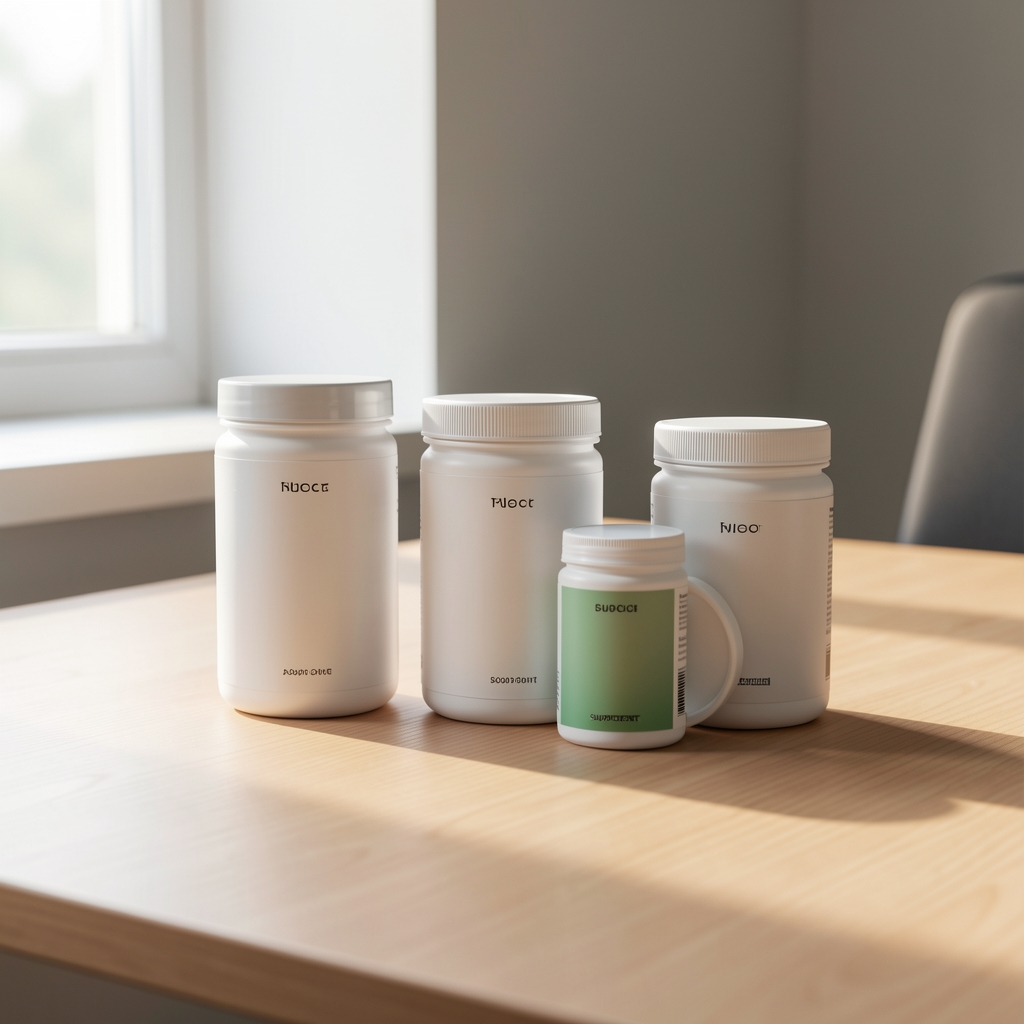
Among the men who write to Orani Journal about their daily habits, one pattern surfaces repeatedly: the morning stack. Not a rigid, branded regimen, but a quiet, self-directed arrangement of two, three, or four nutritional additions taken in the first hour of the day. The consistency of this report, across different age groups and activity levels, warrants editorial attention.
Why the morning matters for nutritional habits.
The observation is not complex. Morning is, for most working men, the most structurally predictable part of the day. Lunch shifts. Evening meals change by social context. But the forty minutes between waking and leaving for work follow a reliable sequence: water, a preparation routine, breakfast in some form. This predictability makes it the natural anchor point for any consistent nutritional habit.
Published nutritional research has examined how consistency of intake timing relates to the sustained presence of water-soluble nutrients in the body. B vitamins, for instance, contribute to daily focus and energy awareness in part because the body processes and excretes them within hours. A daily morning routine creates the repetition that characterises intentional supplement stacking habits.
This does not mean the morning is the only valid timing for every nutrient. Magnesium, for example, is often taken in the evening given its association with muscle recovery rhythm. But the morning stack has a different character — it is about establishing a baseline rather than addressing a specific post-activity need. And for men new to supplement journalling, morning offers the simplest entry point.

The structure of a morning routine shapes nutritional consistency.
Vitamin D as the foundational element.
Vitamin D for men features in the overwhelming majority of morning stacks reported to this publication. This reflects a broader pattern in published nutritional awareness: vitamin D is a fat-soluble nutrient, meaning it is best absorbed in the presence of dietary fat. A morning meal that includes eggs, avocado, or any fat-containing food creates a natural absorption window.
The Journal has documented how men in equatorial climates — including Indonesia, where a significant portion of our readership is based — sometimes assume that sunlight exposure removes the relevance of vitamin D supplementation. Published nutritional research does not support this assumption uniformly. Sunscreen use, time spent indoors, and skin tone variation all affect the actual rate of synthesis from sun exposure. Vitamin D for daily energy rhythm and overall nutritional balance remains an evidence-informed addition to a men's daily supplement stack regardless of geography.
For the active man specifically, vitamin D supports daily energy rhythm alongside bone awareness — two factors that inform both training consistency and recovery. It is not a performance enhancer in the popular sense. It is a foundational nutritional element whose absence is more notable than its presence, which is precisely the character of a well-chosen morning addition.
"The morning stack has a different character — it is about establishing a baseline rather than addressing a specific post-activity need."
Magnesium: the evening argument, the morning reality.
Magnesium and muscle recovery is one of the most frequently cited pairings in men's nutritional writing. Published research consistently identifies magnesium as a mineral that supports muscle recovery rhythm after physical activity, and its association with sleep quality has made the evening an obvious timing choice for many.
Yet the editorial team has observed a counter-pattern: men who train in the mornings often take their magnesium in the morning alongside their other stack items, citing the simplicity of a single, undivided routine. The nutritional logic is not compromised by this approach — the cumulative daily intake is what determines the relevant nutritional pattern, not the precise timing window within the day.
What the morning magnesium adopter sacrifices in precision, they gain in consistency. And for the active man whose primary challenge is adherence to any daily habit over weeks and months, consistency is the more consequential variable. Supplement journalling, when applied honestly, almost always confirms this.
Key observations from this piece
- 01 Morning is the most structurally consistent point in the working day for establishing a supplement routine.
- 02 Vitamin D for men supports daily energy rhythm and remains an evidence-informed addition regardless of sun exposure geography.
- 03 Magnesium supports muscle recovery rhythm; timing is secondary to daily consistency of intake.
- 04 A two-to-four item morning stack represents the dominant pattern reported to this publication by active men.
- 05 Supplement stacking should be viewed as an addition to whole-food nutritional habits, not a replacement.
Creatine and the active man's morning window.
Creatine has long been associated with gym nutrition for men, and the question of optimal timing has generated considerable discussion in published exercise nutritional research. The morning stack position for creatine — taken at breakfast alongside vitamin D — has become one of the more commonly observed patterns among men with consistent resistance training habits.
Creatine supports physical output over time in resistance training routines. The body stores it in muscle tissue, and the daily replenishment model — consistent daily intake regardless of training schedule — is what the current body of published nutritional research appears to support over the timed, pre-workout model that was dominant in earlier decades. For the morning stack, this is excellent news: creatine is an evidence-informed addition that places no particular demand on timing precision.
The editorial team has observed men combining creatine with a protein source at breakfast — whether from whole eggs, Greek yogurt, or a measured serving of protein powder — as a further simplification of the daily supplement stack. This approach reflects the nutrition principle of supplement as addition rather than replacement: creatine is not substituting for whole-food protein; it is functioning alongside it as a distinct addition to the men's daily supplement stack.

Daily creatine intake supports physical output in resistance training contexts.
The discipline of not overcomplicating it.
The men whose supplement journalling the editorial team has examined over the past several years share one characteristic: the successful ones are conservative. They do not attempt to replicate the elaborate stacks occasionally described in popular fitness media. They identify two, three, or at most four additions that address their specific nutritional patterns, and they maintain those consistently.
This conservatism has a nutritional rationale. When a man takes eight or ten different supplements in a single sitting, the potential for overlap, redundancy, and unintentional over-supplementation increases significantly. A focused stack — vitamin D, magnesium, perhaps creatine and a B-vitamin complex — addresses the nutritional gaps most commonly observed in active men's nutritional habits without introducing unnecessary complexity.
Articles published on Orani Journal are editorial in nature and reflect the writers' observations on everyday supplementation habits and nutritional awareness for active men. The content is not intended as professional guidance, nor as commentary on the management of any specific condition. Readers with specific concerns about their daily routines are encouraged to speak with a qualified wellness or nutrition professional before introducing any new habit or routine to their daily life, particularly if they have specific dietary requirements.
The morning stack, in its simplest form, is an act of editorial curation applied to daily life. The same discipline that governs the selection of sources for this publication — relevance, evidence-basis, absence of commercial incentive — is, it turns out, the discipline that most reliably produces a sustainable men's wellness routine. It is not a dramatic discovery. It is a pattern that repeats.