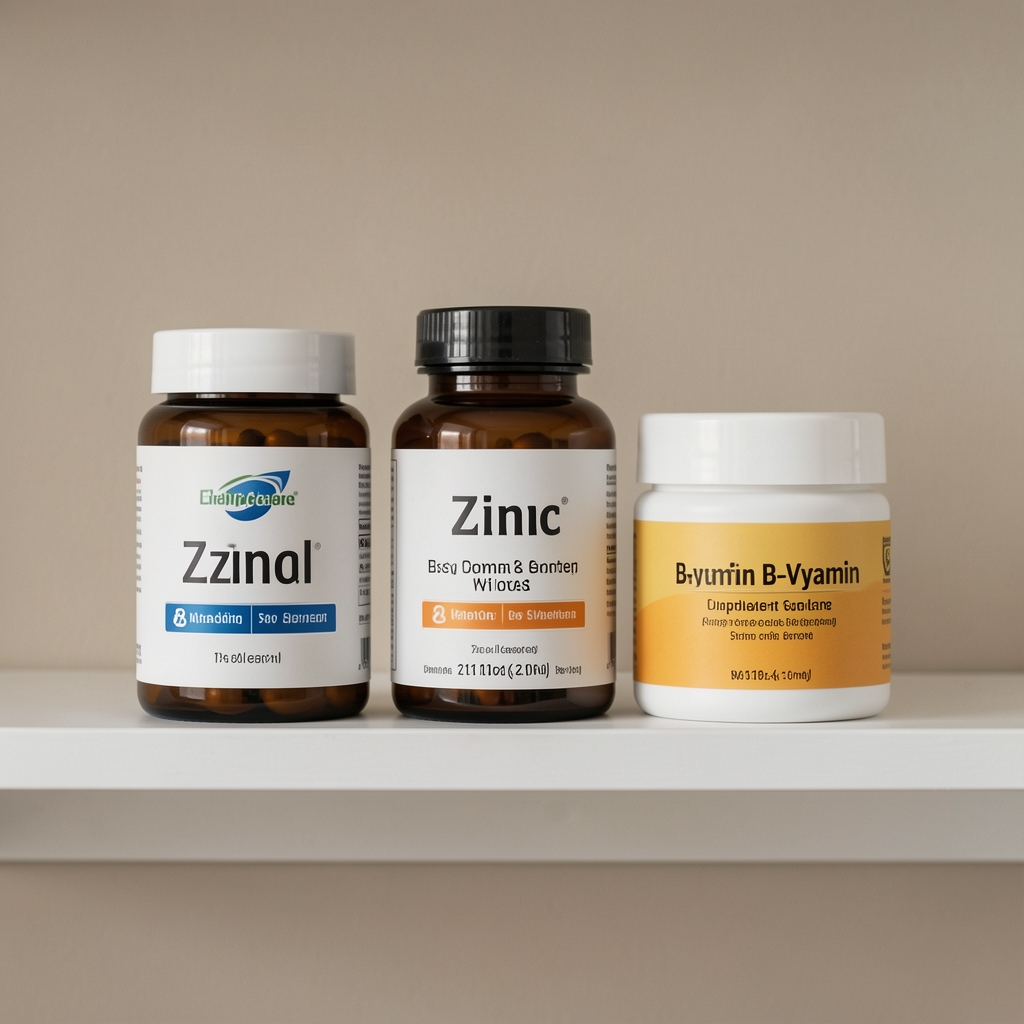
Zinc and men's nutrition have a relationship that the supplement industry has, at times, considerably oversimplified. Beneath the marketing noise, there is a quieter and more interesting story: zinc is a trace mineral with a documented presence in dozens of enzymatic processes, and the active man who trains consistently has a measurably different nutritional demand profile than one who does not. This piece documents what the published research actually observes.
Zinc in the active man's nutritional context.
Zinc contributes to nutritional balance in active men's routines across a wide range of biological processes. Published nutritional research identifies it as a cofactor in protein processing, enzyme activity, and the maintenance of several systems that are directly relevant to men engaged in physical training. The observation that active men may have higher zinc losses — through sweat — than sedentary counterparts has been documented in exercise nutritional research, though the degree varies by training intensity and sweat rate.
The dietary sources of zinc are reasonably well distributed: red meat, shellfish, seeds, legumes, and whole grains all contribute. Men whose diets are protein-rich but primarily plant-based may have a different zinc absorption pattern than those consuming animal proteins, as phytates in plant foods can reduce the absorption of zinc. This dietary distinction is worth understanding when evaluating whether supplementation addresses a genuine gap.
In the context of supplement stacking habits for men, zinc is typically a secondary rather than primary addition — taken not as a foundational daily supplement in the way vitamin D or magnesium often are, but as part of a broader nutritional coverage strategy. Its inclusion in many multivitamin formulations for active men reflects this secondary role.
The B vitamin family: more nuanced than the label suggests.
The B vitamin family is a grouping of eight distinct water-soluble vitamins, each with its own documented nutritional role and its own pattern of dietary availability. The shorthand phrase "B vitamins and energy" — which appears frequently in supplement marketing — reflects a simplified version of a more nuanced story. B vitamins contribute to daily focus and energy awareness through their role in cellular energy processing, but this is not an energy-boosting function in the direct sense the marketing language sometimes implies.
What published nutritional research documents is more specific: adequate B-vitamin status supports the metabolic pathways through which the body converts food into usable energy. When intake is insufficient, the efficiency of these pathways decreases. Supplementation in the context of deficiency or near-deficiency can restore normal functioning; supplementation well above adequate levels does not produce additional performance gains, as the body excretes surplus water-soluble vitamins.
For the active man, the most practically relevant B vitamins are B12, B6, and folate (B9) — three that are most reliably obtained from animal-derived foods and most commonly under-consumed by men who either eat inconsistently or follow predominantly plant-based dietary patterns. The editorial team documents this not as a recommendation for specific supplementation, but as an observation about where the published nutritional evidence suggests genuine gaps can appear.
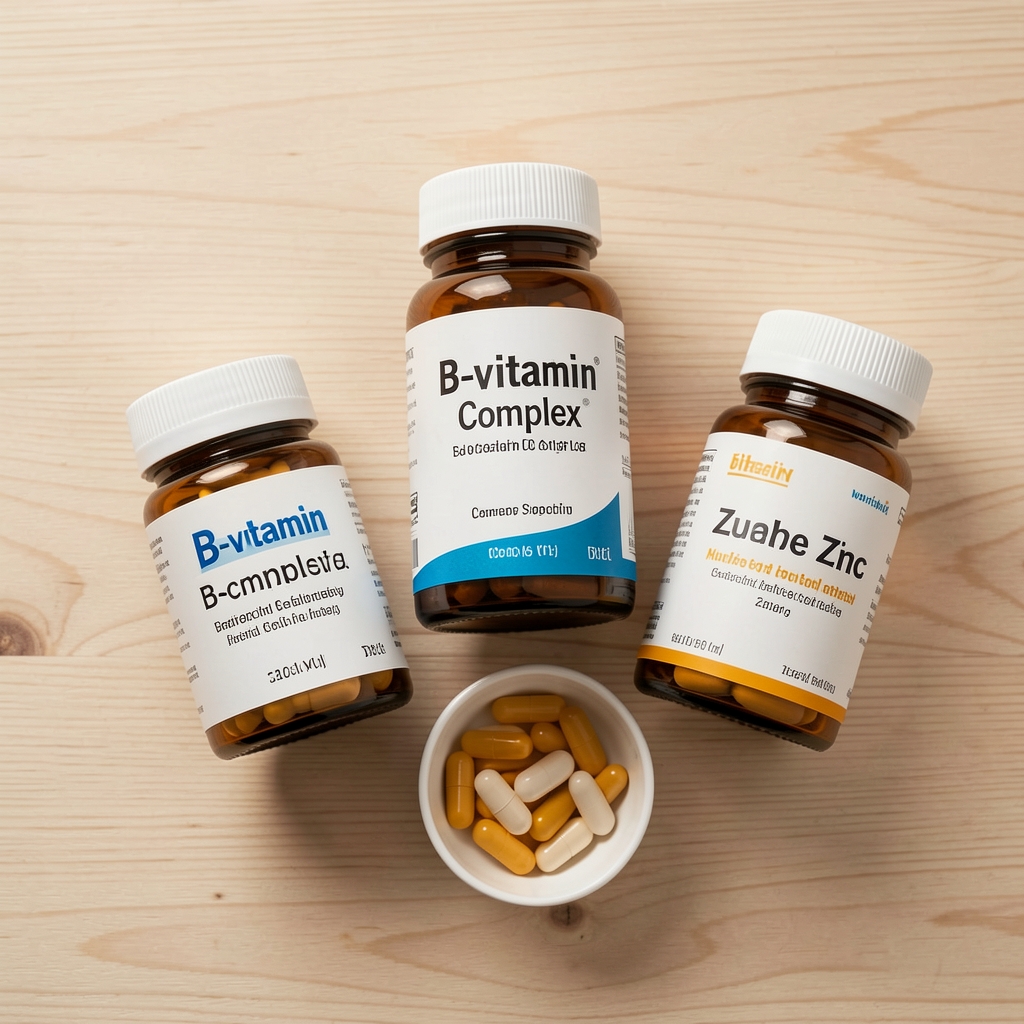
The B vitamin family covers eight distinct nutrients, each with a specific nutritional role.
"Supplementation in the context of deficiency can restore normal functioning; supplementation well above adequate levels does not produce additional performance gains."
Iron and active men: the underobserved gap.
Iron and active men is a pairing that receives less editorial attention than zinc or B vitamins, despite a reasonably clear pattern in the published nutritional literature. Iron contributes to sustained energy awareness in active routines through its role in oxygen transport — it is a component of haemoglobin, the protein that carries oxygen in the blood. Men who train at high frequency, particularly endurance athletes, have documented higher iron turnover than sedentary individuals.
The dietary context for iron in active men's nutritional habits is nuanced. Haem iron — from red meat and organ meats — is absorbed at a higher rate than non-haem iron from plant sources. Men who have reduced their red meat consumption for health or preference reasons may be consuming adequate total dietary iron but absorbing a lower proportion of it. Vitamin C consumed alongside non-haem iron sources enhances absorption; calcium and tannins (from tea and coffee) can reduce it.
For the active man whose supplement stack does not currently include iron, the relevant question is whether his dietary pattern is providing adequate haem iron from food. If red meat appears regularly in the diet, supplemental iron is generally not indicated; if the diet is predominantly plant-based or fish-based, it is worth reviewing. This is precisely the kind of observation that benefits from discussion with a qualified nutrition professional rather than from self-directed supplementation alone.
Key observations from this piece
- 01 Zinc contributes to nutritional balance across multiple processes relevant to active men; losses through sweat vary by training intensity.
- 02 B vitamins contribute to daily focus and energy awareness by supporting cellular energy pathways — not by directly adding energy.
- 03 B12, B6, and folate are the B vitamins most commonly under-represented in men with irregular or predominantly plant-based dietary patterns.
- 04 Iron supports sustained energy awareness in active routines; haem iron from red meat is more readily absorbed than non-haem plant sources.
- 05 Dietary pattern review — not reflexive supplementation — is the appropriate starting point for zinc, B vitamins, and iron decisions.
The place of micronutrients in the broader supplement stack.
Zinc and B vitamins sit in a different category from the macronutrient-adjacent supplements like creatine and protein that dominate gym nutrition discourse. They are micronutrients: required in small quantities, but involved in a wide range of processes that collectively shape how the body functions over time. Their absence tends to manifest gradually and diffusely — fatigue that is hard to attribute, recovery that is slower than expected, focus that fluctuates across the week.
This diffuse pattern of under-intake is one reason why men's supplement review publications, including this one, observe a tendency among readers to begin their supplement journey with the visible, performance-adjacent additions — protein, creatine — and add micronutrient coverage only later, often in response to noticing patterns in their supplement journal that suggest something is missing from baseline function.
The editorial position of Orani Journal is consistent: a daily supplement stack that begins with nutritional foundation — vitamin D, magnesium, zinc, a B-complex — before adding performance-adjacent additions is more aligned with the evidence base than one that prioritises visible performance additions first and fills foundational gaps later. This is, admittedly, a less commercially exciting position. But it is the one the published nutritional research appears to support.

Supplement journalling supports an evidence-informed approach to daily habit building.
Articles published on Orani Journal are editorial in nature and reflect the writers' observations on everyday supplementation habits and nutritional awareness for active men. The content is not intended as professional guidance, nor as commentary on the management of any specific condition. Readers with specific concerns about their daily routines are encouraged to speak with a qualified wellness or nutrition professional before introducing any new habit or routine to their daily life, particularly if they have specific dietary requirements.